Molecular hydrogen (H₂) has been known for over 250 years — as a scientific and industrial phenomenon. As a subject of biological research, however, it is much younger — and its story is fascinating precisely because it started unexpectedly.
From the discovery of hydrogen to modern technology
A brief history of molecular hydrogen research
Molecular hydrogen (H₂) as an independent element was described in 1766 by British chemist Henry Cavendish. For most of modern history, hydrogen was studied primarily as a chemical element, industrial gas, and energy source — not as a substance with potential biological activity.
The scientific community agrees that larger and higher-quality clinical studies are needed to definitively confirm most of the investigated effects. The results are, however, interesting and promising.
Why is molecular hydrogen beneficial for the body?
Molecular hydrogen is among the most extensively studied substances in the field of antioxidant balance support. The key property that gives it such an exceptional position is simple: H₂ is the smallest possible molecule. Because of this, it can easily penetrate tissues, cells and cellular structures that many other substances struggle to reach.
The decisive impulse came in 2007, when researchers published a paper suggesting that molecular hydrogen might selectively react with certain highly reactive oxygen species associated with oxidative damage. Since then, hundreds of experimental and clinical studies have been conducted examining its biological activity.
Key areas of research
🔬 Oxidative stress
The most frequently studied area. Scientists are examining whether hydrogen can influence the balance between free radical production and the body's natural antioxidant defences.
Most published research area🛡️ Inflammatory processes
Research explores whether H₂ can influence certain cellular signalling pathways associated with the body's inflammatory response.
Experimental and clinical studies⚡ Recovery and athletic performance
Several studies have assessed possible effects on post-exercise recovery, fatigue reduction and muscle regeneration support.
Actively studied in sports medicine🧠 Neurology
Ongoing research into the possible influence on nerve tissue and protection of cells against oxidative damage in the nervous system.
Primarily preclinical research⚖️ Metabolic health & ageing
Researchers are examining the potential influence on metabolism, energy processes and certain biomarkers related to metabolic health and the ageing process.
Promising but still limited dataMolecular hydrogen is the subject of intensive scientific research — particularly in relation to oxidative stress, cellular protection and support of the body's natural regenerative processes. Its unique properties and ability to easily penetrate tissues make it one of the most fascinating molecules being studied today.
Hydrogen anywhere — Hydrox in action
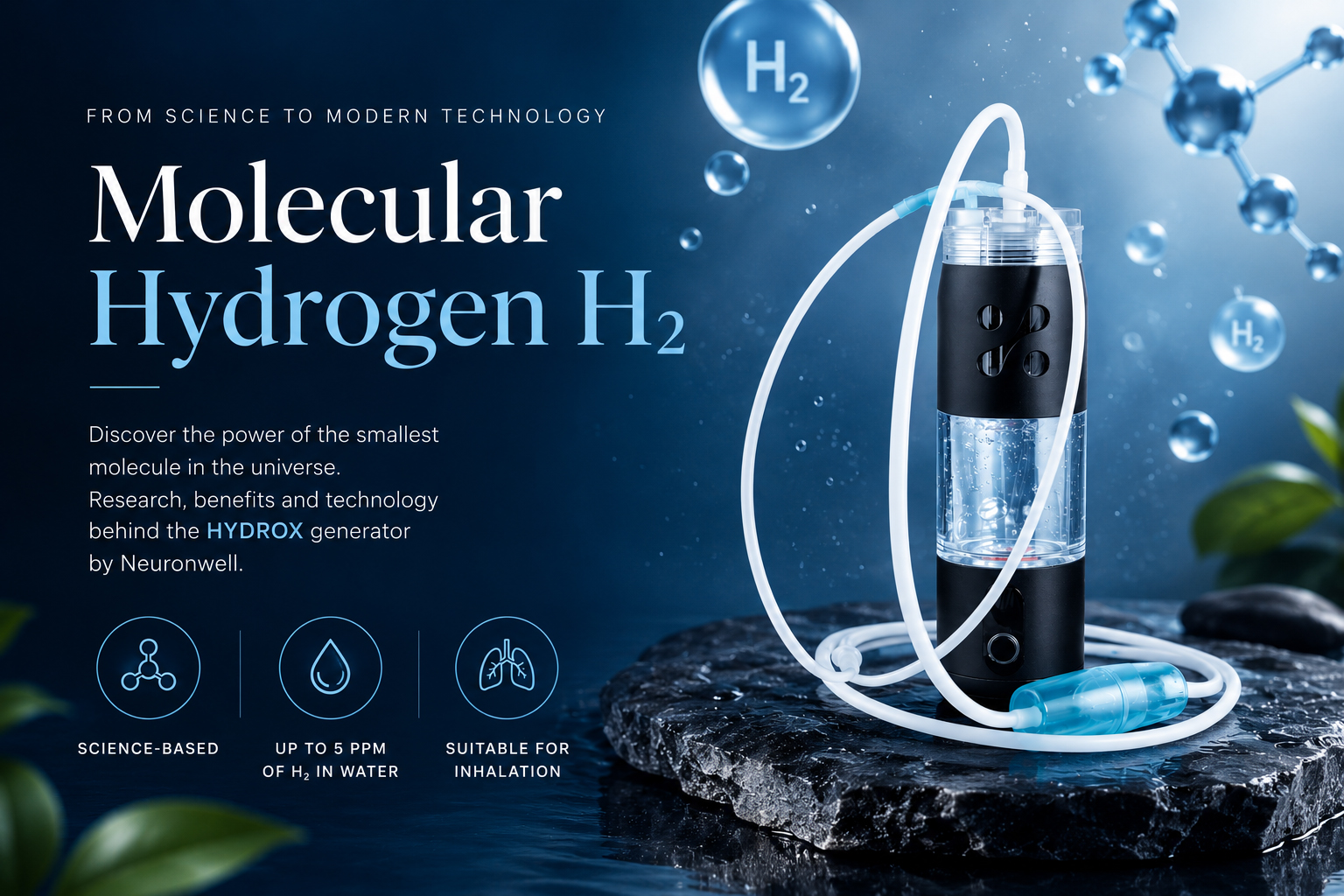
The Hydrox hydrogen water generator from Neuronwell represents a modern, simple way to prepare water enriched with molecular hydrogen. Using advanced electrolysis technology, it produces water with a high concentration of dissolved hydrogen in just a few minutes. The compact, portable design makes it convenient for use at home and on the go.
How does the Hydrox hydrogen bottle work?
Fill and switch on
Pour the cleanest water available into the glass bottle and start a cycle — filtered or distilled water ensures the best results and a longer product lifespan.
Electrolysis in action
Electrolysis splits water molecules into hydrogen and oxygen — fine bubbles appear in the water. This is how the water becomes enriched with molecular hydrogen.
Choose your cycle length
5 or 10 minutes. A longer cycle produces a higher concentration of dissolved hydrogen.
5 min → 3 ppm H₂ 10 min → 5 ppm H₂Drink as soon as possible
We recommend drinking the water shortly after preparation — this is when the molecular hydrogen content is at its highest. The bottle holds 230 ml, so you always prepare a fresh portion.
Technical specifications
Inhalation use
The Hydrox system also includes an inhalation attachment that allows inhalation of a gas mixture containing molecular hydrogen. Inhalation is one of the application methods used in scientific studies focused on molecular hydrogen.
Precisely because of its exceptionally small molecular size, hydrogen is among the most fascinating molecules being studied today. Inhalation represents a practical way of direct application during device operation. The inhaler can be used daily according to individual needs — the duration is limited to the length of the production cycle. Once the cycle ends, the gases disperse very quickly; the cycle can be repeated.
- Ohta S. (2011). Recent Progress Toward Hydrogen Medicine: Potential of Molecular Hydrogen for Preventive and Therapeutic Applications. — pmc.ncbi.nlm.nih.gov — PMC10816294
- Hydrogen Water: Extra Healthy or a Hoax? — Systematic Review. — pmc.ncbi.nlm.nih.gov — PMC10816294
- Health Benefits of Electrolyzed Hydrogen Water: Antioxidant and Anti-Inflammatory Effects. — pmc.ncbi.nlm.nih.gov — PMC10967432
- Hydrogen-Rich Water Ameliorates Autistic-Like Behavioral Abnormalities. — pmc.ncbi.nlm.nih.gov — PMC6087877
- Hydrogen as a novel hypothesized emerging treatment for oxidative stress in autism. — researchgate.net — 232225514
- The Benefits of Hydrogen Inhalation Therapy. — livingartswellness.com
HYDROX —
molecular hydrogen
generator & inhaler
Electrolysis · 3–5 ppm H₂ · 5 or 10 min cycle · 230 ml glass bottle · Portable · USB charging · Inhalation attachment included
View Hydrox →

